wellness
Gut Health 101: Fermented Foods You Can Find Locally
From kimchi to kefir, Kensington Market's independent food vendors are quietly stocking some of the best gut-friendly ferments in the city.
Listen in English · 4 min
How we reported this
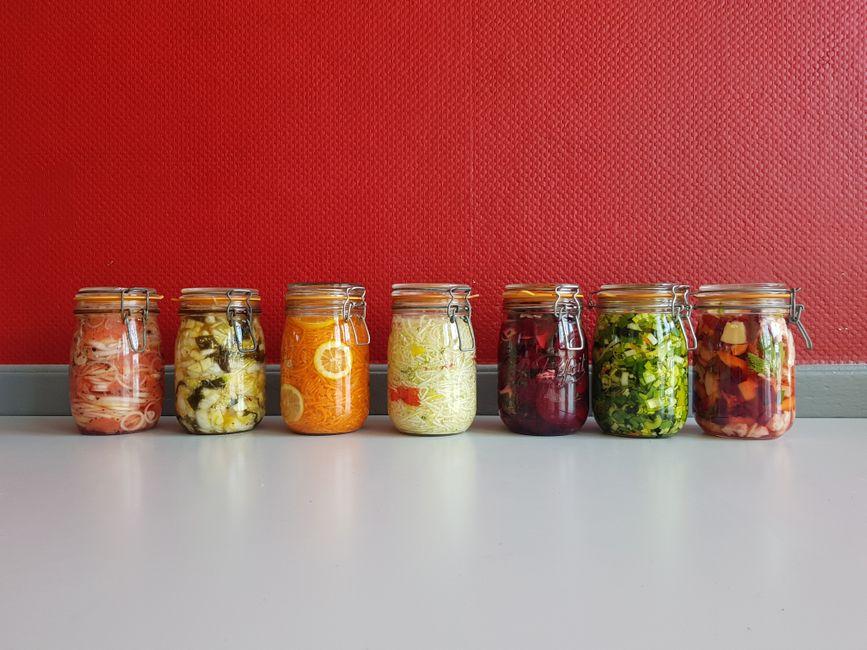
Walk Augusta Avenue on a Friday morning and you'll smell it before you see it, the sharp, vinegary tang coming off barrels of house-fermented pickles outside at least three separate stalls. Kensington Market has always been a food neighbourhood, but its fermented food scene has grown noticeably denser over the past 18 months, driven by vendors responding to sustained customer demand for probiotic-rich, shelf-stable products that don't require a trip to a specialty health store.
Gut health is no longer a fringe wellness topic. Researchers at the Human Microbiome Project have spent years cataloguing the roughly 38 trillion microbial cells that live in the average adult body, and the evidence linking microbiome diversity to immune function, mood regulation, and digestive health has moved from academic journals into mainstream clinical conversation. General practitioners now routinely field questions about fermented foods, and registered dietitians increasingly cite live-culture products as a practical, low-cost intervention for improving digestive resilience, though anyone with a specific health condition should talk to their own doctor before making significant dietary changes.
What the Market Actually Stocks
Sanagan's Meat Locker on Baldwin Street, a Kensington institution since 2009, has extended its charcuterie counter to include house-cured, lacto-fermented sausages. The shop sources its starter cultures locally and rotates seasonal varieties; a 200-gram package runs about $11. A few doors down, Cheese Magic carries a rotating selection of raw-milk aged cheeses, several of which are technically fermented foods, plus a small but reliable refrigerated section of plain whole-milk kefir from a Quebec dairy cooperative priced at $7.50 for 500ml. Staff there can walk you through the difference between kefir cultured with live grains versus industrially pasteurised versions, the former retains far more active bacterial strains.
For plant-based ferments, Global Cheese on Kensington Avenue stocks at least four varieties of kimchi year-round, sourced from a Korean family-run producer operating out of the Junction neighbourhood. The standard napa cabbage variety goes for $9 per 400-gram jar. Nearby, the weekend farmers' market that sets up along the pedestrian stretch of Kensington Avenue, running every Saturday from 8 a.m. through early afternoon, regularly features a vendor called Slow & Cultured, which sells small-batch miso, tempeh, and raw kombucha. Their ginger-turmeric kombucha, 330ml, sells for $6 and consistently sells out before noon.
Reading the Label Before You Buy
Not everything marketed as fermented actually delivers live cultures by the time it reaches your gut. Heat pasteurisation, used to extend shelf life, kills the beneficial bacteria that make fermented foods worth eating for gut health purposes. A 2022 Stanford University study published in Cell found that a diet high in diverse fermented foods increased microbiome diversity and decreased markers of inflammation in participants over a ten-week period. The key variable was live cultures. Products sitting in the ambient-temperature section of a grocery chain are almost always heat-treated. Refrigerated, cloudy, or sediment-heavy products from small producers, exactly the kind you'll find in Kensington Market, are far more likely to contain active bacterial colonies.
Look for labels that say "raw," "unpasteurised," or "contains live cultures." With kombucha specifically, check the sugar content; some commercial brands load in fruit juice post-fermentation, pushing a single bottle past 25 grams of sugar, which largely defeats the purpose. The Slow & Cultured kombucha sold at the Saturday market registers at under 6 grams per serving, according to its printed nutrition panel.
The practical entry point for most people is a single daily serving of one fermented food, a spoonful of kimchi alongside lunch, a small glass of kefir in the morning, a few grams of miso stirred into warm broth at dinner. You don't need to overhaul your diet. Kensington Market's density of small, knowledgeable producers means you can build that habit without leaving the neighbourhood, and most vendors are willing to explain exactly what they make and how. Start with one product, give it four to six weeks, and pay attention to how you feel. That's the whole method.